
10 Days Before Your Flight
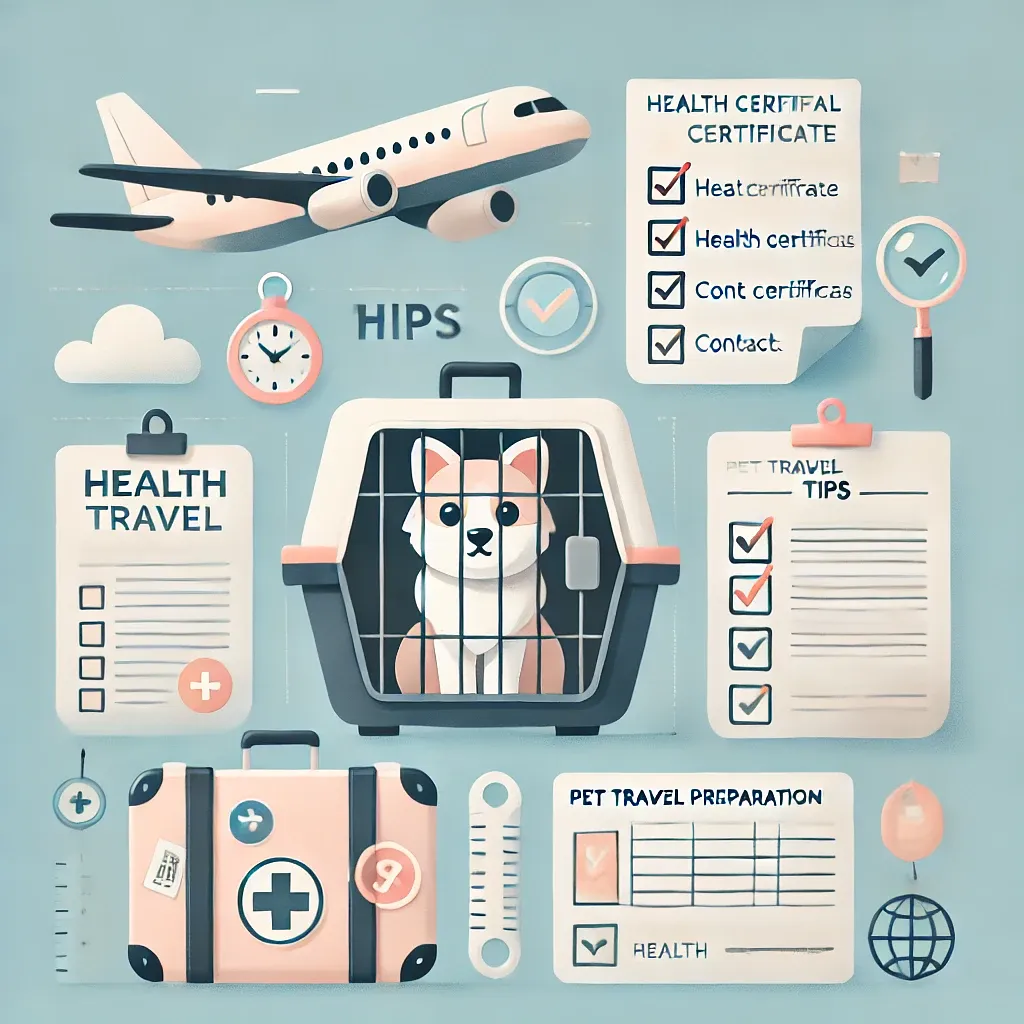
Your pet should be completely comfortable with its kennel or carrier that it will be traveling in. Trying to escape from a kennel is another common cause of pet injury during transport by plane.
Make sure you pet has a health certificate from your veterinarian not more than 10 days in advance of your trip.
Most airlines and veterinarians don’t recommend tranquilizers for your pet when you fly. Tranquilizers can adversely affect your pets breathing and ability to regulate body temperature. Be sure to discuss tranquilizers with your vet before deciding to go this route.
Call the airline a few days before your scheduled departure to make sure you have everything in order and there are no scheduling or other changes that may adversely affect your pet’s travel.
Make sure you have all required paperwork and documentation in order.
Make sure that your pet’s tags are current and that you have current contact information on file with your vet or microchip vendor.
Take a picture of your pet and tape one copy to the kennel, and keep one with you should your pet become lost.
Related Resources
Need Help?
Have questions about pet air travel? Visit our FAQ page or explore our comprehensive guides.
View FAQsYou Might Also Like
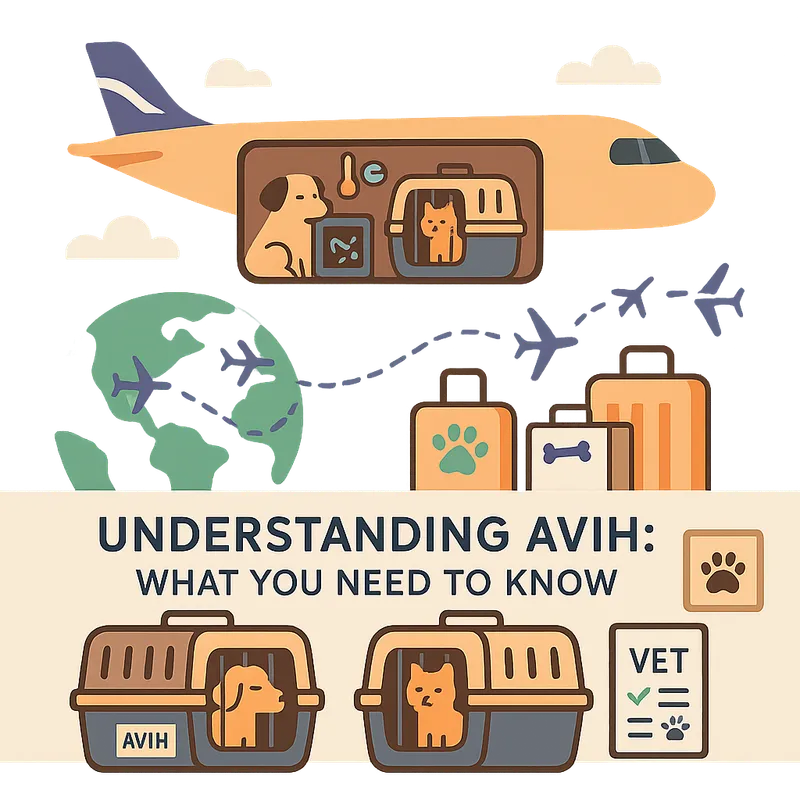
What Does AVIH Mean?
Traveling with pets can be stressful, especially when you need to transport them by air. There are various regulations and procedures in place to ensure the safety and well-being of animals in transit. One term that often comes up in this context is **AVIH**
As you plan for your flight with your pet
Choose the most direct flight to your destination. This will help reduce the stress on your pet. If warm temperatures are a concern, book an early morning, evening, or overnight flight when the temperatures are cooler. If cold weather is an issue, book your flight for the middle of the day.
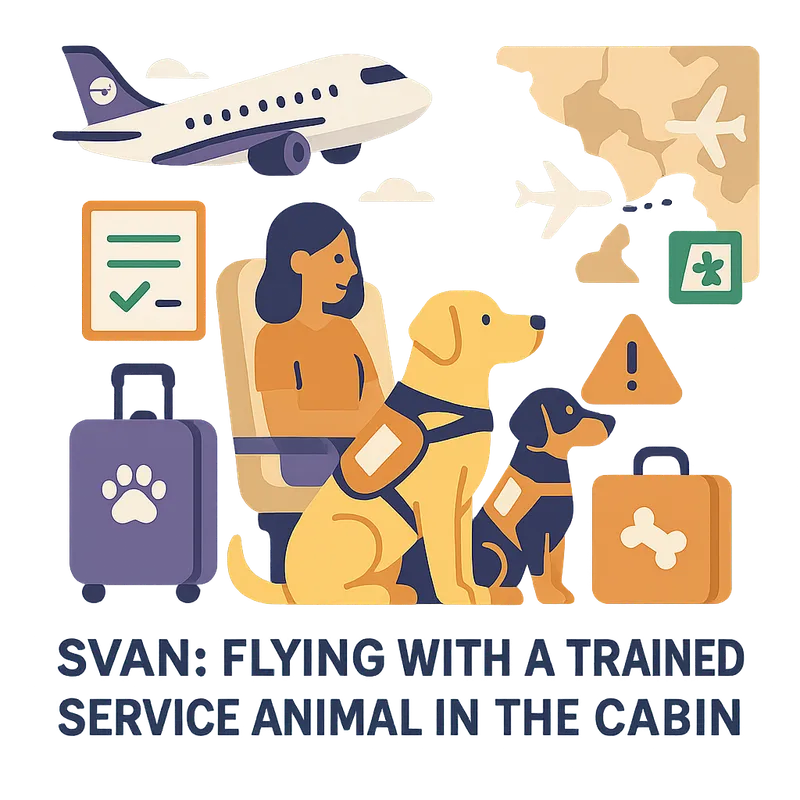
SVAN: Flying With a Trained Service Animal in the Cabin
SVAN is the Special Service Request code airlines use when a passenger travels with a trained service animal in the cabin. Here is what the code means, who qualifies under DOT rules, and the step-by-step process: forms, timing, airport relief areas, and on-board requirements.
July 2026 Airline Pet Travel Report
This month we have one death to report. On May 16, 2026, a French Bulldog named Guapo passed away while traveling as cargo on Alaska Airlines...
March 2026 Airline Pet Travel Report
Happy to report there were no pet incidents for the travel month of January 2026!
Airline Pet Policies Compared: In-Cabin and Cargo Options (2026)
How the major U.S. airlines compare on pet travel: which carriers allow pets in the cabin, which still offer hold or cargo transport, what drives the real differences between policies, and a booking checklist to avoid surprises.